

Long before essential oils became part of modern aromatherapy, people were discovering the beauty and usefulness of aromatic plants. Across ancient civilisations, flowers, leaves, roots, woods and resins were valued for their fragrance and incorporated into rituals, personal care, traditional remedies and everyday life.
From the temples of ancient Egypt to the herbal traditions of China and India, the use of aromatic botanicals has a fascinating history. Fragrant preparations were treasured not simply for how they smelled, but for the meaning they held within different cultures and their place in traditional approaches to wellbeing.
Although the methods and understanding have evolved considerably, our relationship with the natural aromas of plants continues today. The history of essential oils is really a story of curiosity, craftsmanship and our enduring connection with the botanical world.
Let's explore how these traditions developed, how distillation changed the way aromatic extracts were produced, and how ancient knowledge helped shape the aromatherapy practices we recognise today.

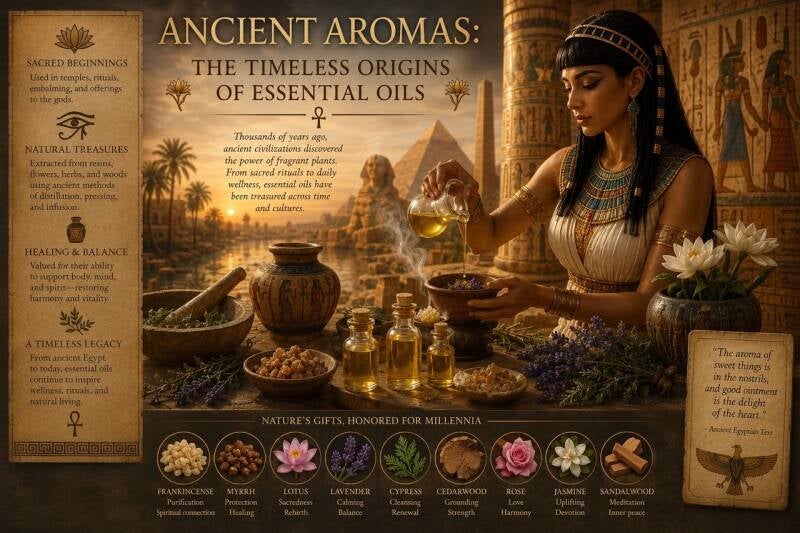
Sacred Scents of the Pharaohs: Essential Oils in Ancient Egyptian Rituals
In ancient Egypt, fragrance was far more than a luxury. Aromatic plants, precious resins and perfumed oils played an important role in religious ceremonies, personal grooming, skincare and funerary traditions.
Frankincense and myrrh were particularly valued. These fragrant resins were used as incense and incorporated into preparations associated with temples and burial rituals. Aromatic substances also formed part of the elaborate embalming practices used to prepare the deceased for the afterlife.
The Egyptians developed sophisticated ways of preparing perfumes and fragrant oils. Plant materials could be pressed, heated or infused into animal fats and vegetable oils to capture their scent. These preparations were stored in carefully made vessels and were often considered precious commodities.
One particularly interesting example is kyphi, a complex aromatic incense made from a mixture of ingredients, which could include resins, herbs, spices and other fragrant materials. It was burned during religious ceremonies and was associated with the sacred atmosphere of temples.
Fragrance was woven into many aspects of Egyptian life, connecting the physical world with spiritual beliefs. Their appreciation of aromatic plants left a lasting impression on the history of perfumery and the traditional use of botanicals.
The Greek and Roman Legacy of Aromatic Plants
The ancient Greeks inherited and developed many of the aromatic traditions that had travelled through the Mediterranean world. Fragrant oils, herbs and botanical preparations became part of personal care, bathing rituals and traditional medicine.
The physician Hippocrates, often regarded as one of the founders of Western medicine, recognised the importance of lifestyle, environment and natural remedies. Aromatic plants were among the many botanical ingredients used in the traditional medical practices of the time.
The Romans embraced fragrance enthusiastically. Scented oils were used in public baths, private homes and personal grooming, while aromatic preparations featured in perfumes, massage and everyday self-care. Gardens filled with fragrant herbs and flowers provided ingredients for these preparations, and trade brought precious resins and spices from distant regions.
Writers such as Dioscorides documented the uses of numerous plants and their preparations, helping to preserve botanical knowledge for generations. His influential work, De Materia Medica, became an important reference in the history of herbal medicine.
Although these early preparations were not necessarily essential oils as we understand them today, they helped establish a long tradition of exploring the properties, fragrances and practical uses of aromatic plants.
The Islamic Golden Age and the Development of Modern Essential Oil Distillation
One of the most significant chapters in the history of aromatic preparations unfolded during the Islamic Golden Age, a period of remarkable scientific, medical and intellectual development spanning several centuries.
Scholars and practitioners across the Islamic world made important advances in chemistry, pharmacy and the preparation of botanical substances. Their work helped refine distillation techniques, allowing fragrant materials to be separated and collected in increasingly sophisticated ways.
The physician and philosopher Avicenna (Ibn Sina) is often associated with advances in the distillation of aromatic substances, particularly rose water. However, these developments were part of a much wider tradition of experimentation and knowledge-sharing, involving numerous scholars and craftspeople.
Distillation apparatus, including the alembic still, became increasingly important in the preparation of floral waters and aromatic extracts. Rose water was especially valued for its fragrance and was used in personal care, medicine, perfumery and daily life.
These developments helped shape the techniques that would eventually contribute to modern essential-oil production. The history of distillation is a wonderful example of how knowledge travelled between cultures, with each generation building upon the discoveries of those who came before.
The Modern Revival: Essential Oils in Today’s Holistic Spaces
After centuries of traditional use, aromatic plant extracts gradually developed into the essential oils and aromatherapy products we recognise today.
The term aromatherapy became widely associated with the work of French chemist and perfumer René-Maurice Gattefossé, who published a book of that name in 1937. His work helped bring renewed attention to the potential uses of essential oils and encouraged further interest in their properties.
During the following decades, aromatherapy continued to develop, with practitioners exploring the use of essential oils in massage, skincare, fragrance and complementary wellbeing practices.
Today, essential oils are enjoyed in many different ways. Some people use a diffuser to create a pleasant atmosphere at home, while others incorporate carefully diluted blends into massage and skincare routines.
Individual oils have their own distinctive aromatic characteristics. Lavender is often chosen for its soft, floral fragrance, while citrus oils offer bright, uplifting scents. Woody oils such as cedarwood and frankincense bring warmth and depth to a blend.
The art of blending is another fascinating part of modern aromatherapy. Combining different oils allows us to create individual fragrance profiles suited to personal preferences and particular occasions.
Whether used as part of a relaxing evening ritual, a massage or simply to bring the natural fragrance of plants into the home, essential oils continue to offer a connection with the botanical world.
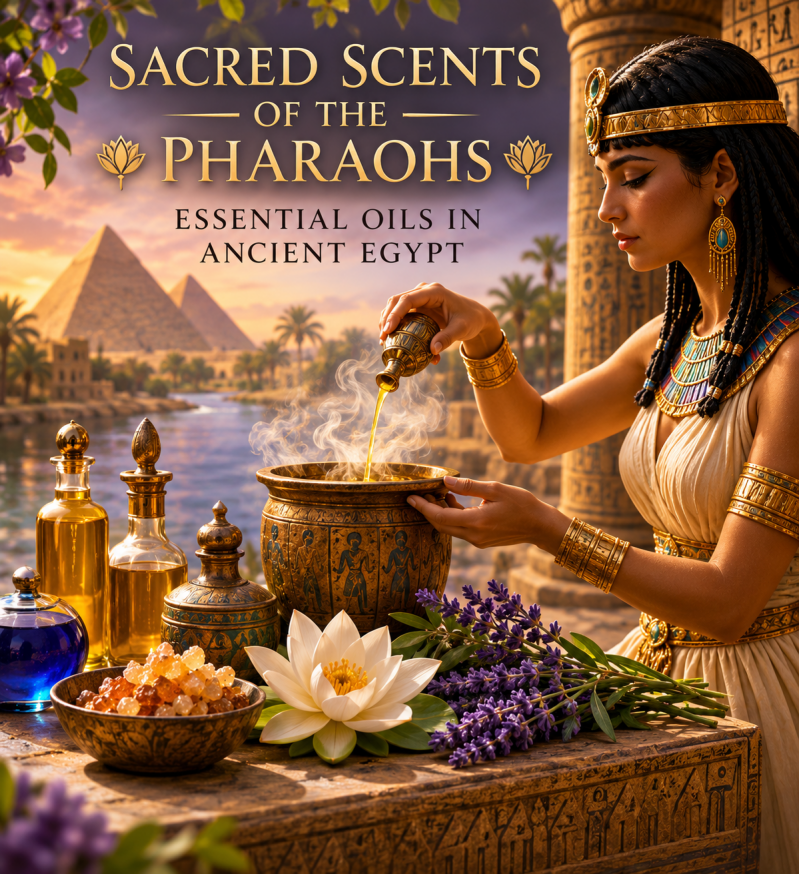


Frequently Asked Questions About Essential Oils Through History
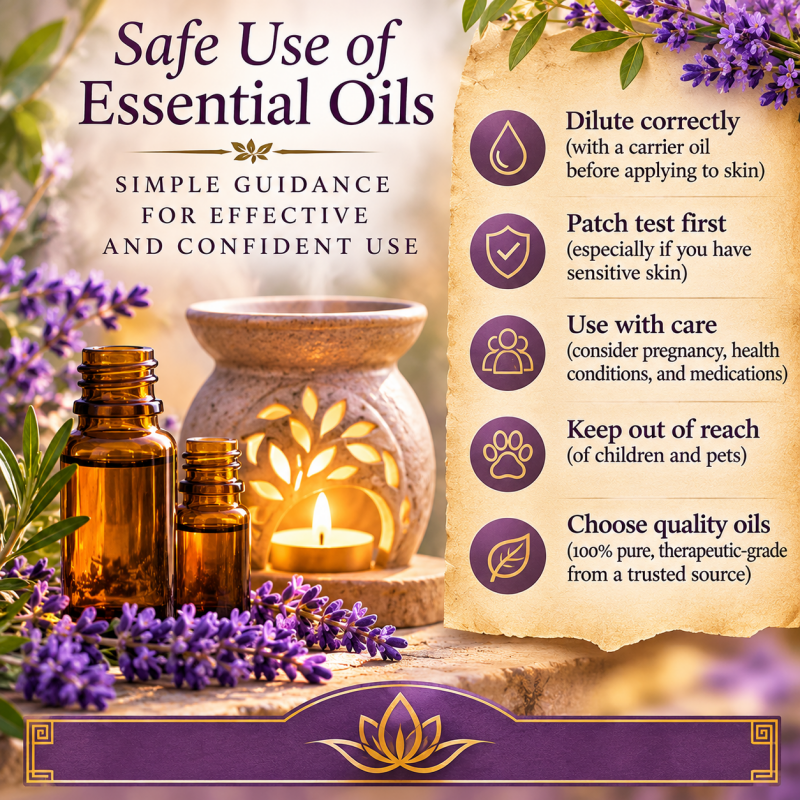
How can I use essential oils safely based on historical wisdom?
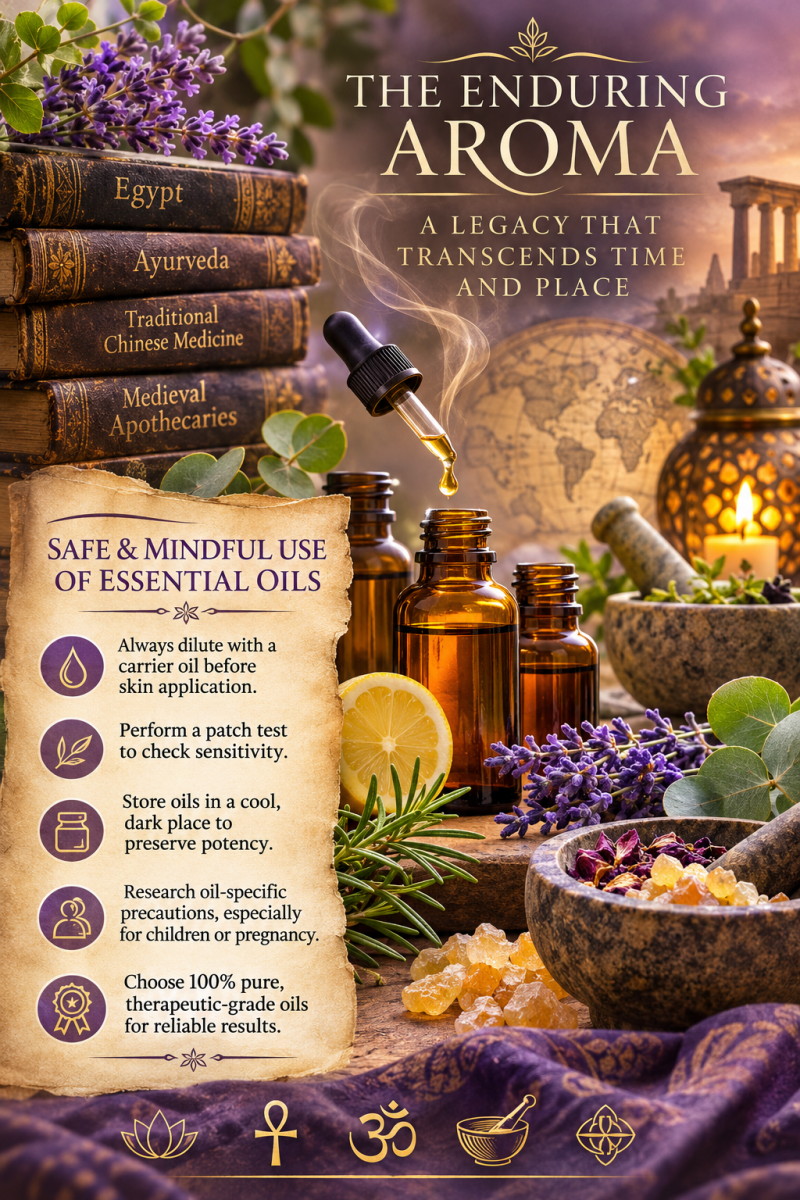
- Always dilute with a carrier oil before skin application
- Perform a patch test to check sensitivity
- Store oils in a cool, dark place to preserve potency
- Research oil-specific precautions, especially for children or pregnancy
- Choose 100% pure oils for reliable results
Understanding the journey of essential oils helps modern users apply them with both reverence and responsibility.
The Enduring Aroma: A Legacy That Transcends Time and Place
From ancient temple rituals to modern homes, aromatic plants have held a special place in human life. Across centuries and cultures, flowers, herbs, woods and resins have been valued for their fragrance and their role in personal care, traditional practices and everyday rituals. Today, essential oils continue to offer a way to enjoy the distinctive aromas of the botanical world and bring nature into our daily surroundings.
As interest in aromatherapy continues to grow, many people enjoy incorporating essential oils into simple routines at home. Whether diffused to create a welcoming atmosphere or used in carefully diluted massage and skincare blends, each oil offers its own distinctive fragrance. Exploring these aromas can be a personal journey of discovery, guided by curiosity, preference and responsible use.
Consider joining local aromatherapy workshops or accessing trusted resources through your website to deepen understanding. As you build your knowledge, you empower yourself to make informed, intentional choices—honouring an ancient practice while adapting it to modern life. Your journey with essential oils is not just about healing—it’s about connection, discovery, and continuing a legacy that still breathes in every drop!

Add comment
Comments